Samsung Galaxy Express 2 Review

Introduction
The Samsung Galaxy Express 2 comes with one hallmark feature – it supports 4G LTE connectivity. The Express 2 takes pride in being one of the more affordable smartphones with LTE, but that does not necessarily make it cheap. It's a mid-range phone that checks most bases, at least on paper – it's got a fairly spacious 4.5” display, a dual-core Snapdragon chip and runs on Android Jelly Bean.
In the box:
- Wall charger
- microUSB cabler
- In-ear headphones
- User manual
Design
The Galaxy Express 2 is a smartphone with typical Samsung looks, a bit chubby in appearance, but otherwise solidly put together.
Overall, the second generation Galaxy Express is a device of reasonable size, heft and thickness. With its healthy-sized 4.5-inch display, it is not too small, nor too large, and easily fits in a pocket. It’s definitely on the chubby side, though, measuring 0.39” (9.8mm) thick. While that’s not a dealbreaker for us, it’s a thing to consider, and we do wish the handset was at least just a bit thinner.
Overall, the Galaxy Express 2 leaves an impression of a solidly built phone. It’s practical and nicely put together, but nothing more.

5.21 x 2.59 x 0.39 inches
132.4 x 65.8 x 9.8 mm
4.73 oz (134 g)

5.11 x 2.59 x 0.46 inches
129.9 x 65.9 x 11.6 mm
5.04 oz (143 g)

5.3 x 2.63 x 0.39 inches
134.5 x 66.7 x 9.88 mm
4.59 oz (130 g)

5.25 x 2.84 x 0.36 inches
133.25 x 72.25 x 9.15 mm
5.61 oz (159 g)

5.21 x 2.59 x 0.39 inches
132.4 x 65.8 x 9.8 mm
4.73 oz (134 g)

5.11 x 2.59 x 0.46 inches
129.9 x 65.9 x 11.6 mm
5.04 oz (143 g)

5.3 x 2.63 x 0.39 inches
134.5 x 66.7 x 9.88 mm
4.59 oz (130 g)

5.25 x 2.84 x 0.36 inches
133.25 x 72.25 x 9.15 mm
5.61 oz (159 g)
Compare these and other phones using our Size Comparison tool.
Display
The reasonably large 4.5-inch qHD screen on the Galaxy Express 2 is okay for its class with only slightly washed out colors, but it lacks automatic brightness.
The Galaxy Express 2 features a 4.5-inch IPS LCD display with a resolution of 540 x 960 pixels (qHD). With pixel density reaching 245ppi, it goes for a reasonably sharp screen for its class, making it possible to read regular-sized text clearly, but tinier fonts are hard to read.
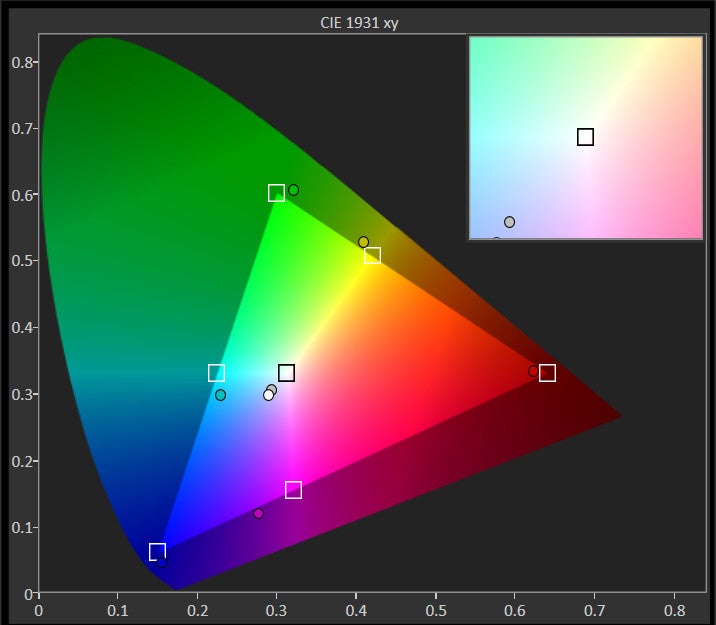
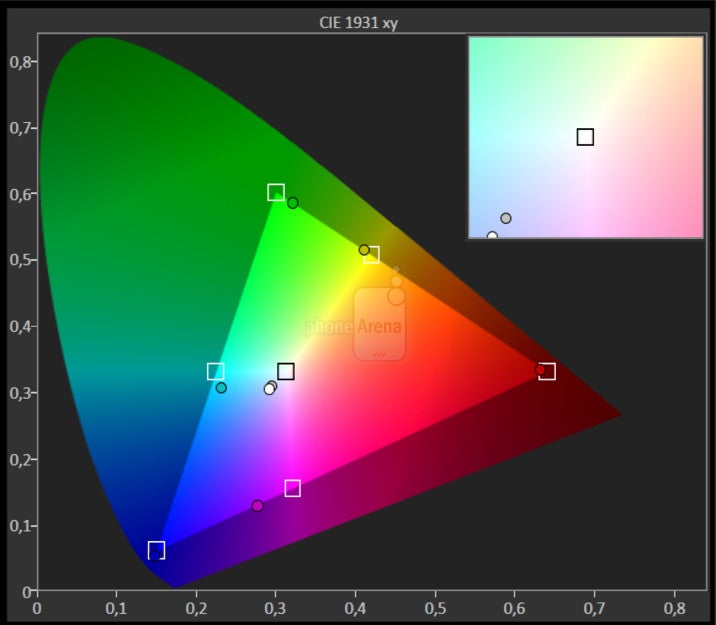
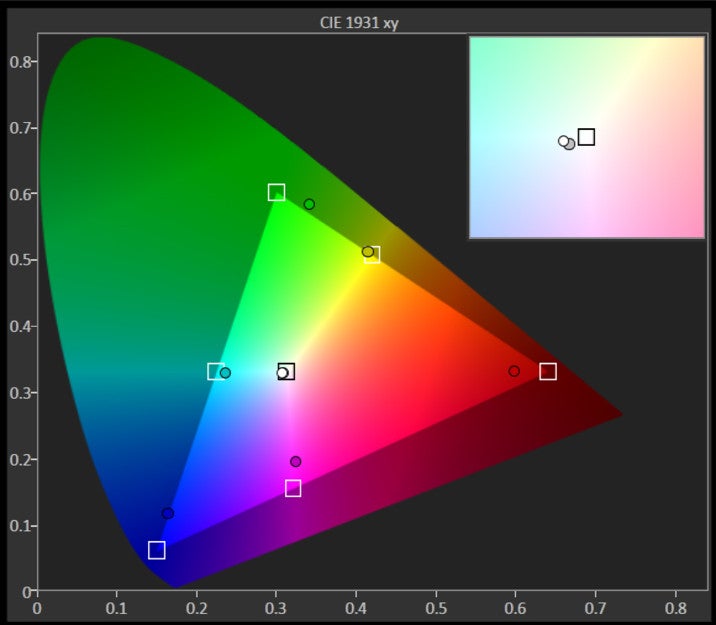
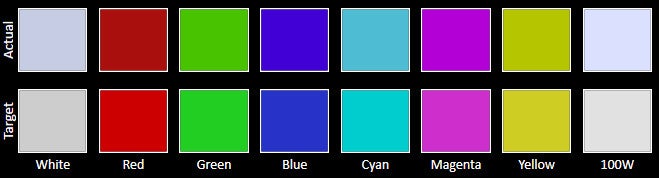
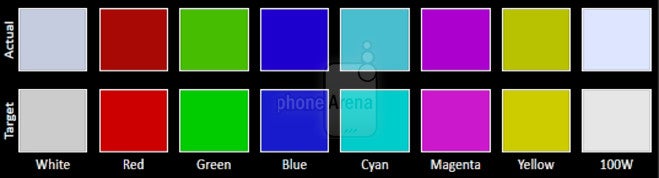
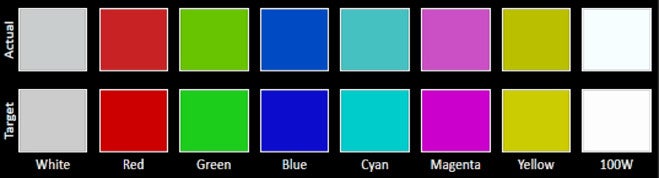
In terms of colors, the display is far from being perfectly accurate - colors appear a bit washed out and pale rather than overblown, whites are colder than normal, and nearly all colors are generally a bit off, most notably blues and cyan in particular. However, for the average user who does not care about really true-to-life colors it is fine..



Interface and Functionality
A not-so-fresh Android 4.2 Jelly Bean with a feature-packed Samsung TouchWiz, and a bunch of signature Samsung apps are on board.
The Galaxy Express 2 features Android 4.2.2 Jelly Bean with Samsung’s TouchWiz ‘Nature UX 2.0’ skin on top. Having a year-old version of Android on board is a bit disappointing, but Samsung’s skin tries to make up for that, as it is packed with all sorts of ‘smart’ features like air gestures and eye tracking that some may like, and others may never use. Fact remains that the UI is the absolute champion in terms of richness of built-in features, so you’ll definitely have choice in that regard with feats like S Beam, Smart stay and Screen Mirroring. TouchWiz itself is also very colorful, almost too cheerful, with its cartoony visuals and icons.
Basic functionality is well covered with the core phone app easily integrating with Google’s cloud contacts. Samsung adds swipe gestures to your contact list allowing you to call or text someone by just swiping left or right on the contact’s name. The keyboard is well spaced and easy to type on, but it lacks some language layouts.
Processor and Memory
The dual-core processor delivers smooth performance, and we managed to play even more demanding games with ease.
Despite not featuring the latest of processors, we’re pleased with the fluid, lag-free performance of the Galaxy Express 2. Scrolling around the main menu and home panels happens without a stutter, and running the core apps is also buttery smooth.
In terms of hardware, the Express 2 runs on a Snapdragon S4 Plus MSM8930 system chip. It’s a 28nm LP dual-core chip running at up to 1.7GHz (those are turbo frequencies, nominally it runs at up to around 1.1GHz-1.2GHz) with 1.5GB of single-channel LPDDR2 RAM.
It features the Adreno 305 graphics chip that proves perfectly capable of handling most games at that resolution. We tried casual games like Temple Run 2 and more demanding games like Asphalt 8 - all of them ran fairly smoothly, so we enjoyed the gaming experience a lot. You should not expect to see the maximum amount of graphical detail in games like Asphalt, but that compromise is worth it since the game plays nicely, at a steady framerate.
The handset comes with 8GB of internal storage that you can expand via microSD cards of up to 64 gigs. Android and TouchWiz together, however, are eating up nearly half the built-in memory, so you end up having around 4.5GB actually available for your free use.
Internet and Connectivity
4G LTE on the Express 2 is blazing fast, and it works in most of the world except for North America.
The phone ships with Samsung’s custom Android browser and Google’s mobile Chrome on board. Both get the job done well, but we prefer Chrome for its better interface and cross-device syncing capabilities. Scrolling and zooming around is fairly smooth, and surfing in general is a pleasure. If we had to pick the nits, we’d say that It takes a second for the actual text on websites to render properly. Again, not a huge issue, but still a noticeable slight delay.
The Galaxy Express 2 hallmark feature is 4G LTE connectivity. It supports FDD-LTE at bands 3, 7, 8, and 20, used widely in the Old continent and Asia, but also the Middle East, Latin America and Africa, so basically you can roam the world with this phone on 4G LTE (except for North America and China). If your current market does not yet support LTE, the phone can also fall back to HSPA+ supporting a very fast up to 42.2 Mbps down.
Other connectivity options include A-GPS, single-channel Wi-Fi b/g/n, Bluetooth 4.0 and NFC.
Camera
A fast, 5-megapixel camera delivers good images when the conditions are right.
The second-gen Galaxy Express has a 5-megapixel auto-focus camera with a single LED flash on the back, and a VGA shooter on the front.
The images turn out quite decent. They lack a bit in sharpness, definition, and detail, but nothing tragic, and overall are well exposed and with pleasing colors. Look at the images below to see that even with a mid-range device like the Galaxy Express 2, one could capture perfectly usable photos that capture well the spirit of the place and season (it’s winter here!).
Indoors and in-low light in general, colors are skewed and images don’t look that good. Many of the captured indoor images come with a yellowish/greyish tint all over them. The LED flash is also a bit on the weak side, not capable to fill the edges of the scene we shoot (shot from around 5 feet). When it fires, it tends to result in images that have unnaturally cold colors.
Samsung Galaxy Express 2 Sample Images
The front camera is a very basic VGA shooter that you can use for video conferencing and selfies, but the quality of the images is very low.
Samsung Galaxy Express 2 Sample Videos
Multimedia
Great media experience with vast support for movie codecs, a rich gallery app, and a good feature-packed music player.
We like Samsung’s Gallery app with its two-column design showing your albums on the left, and your images on the right - browsing around images is quicker than on single-column designed apps. The gallery also has a pretty rich image editor allowing you to frame images, annotate them, rotate, crop and add filters, of course.
The Galaxy Express 2 features a reasonably sized display, so watching video and browsing through images is a pleasure. Samsung’s built-in video player plays back all common formats with ease, but even if you have trouble with a rare codec, you can always head to the Play Store to find a media player that will support it.
The Galaxy Express 2’s loudspeaker is definitely on the quiet side - it lacks the oomph you might want when playing a song, a movie or a game. We’ve gotten used to the average tinny sound on most smartphones, and the Express 2 is just as most other smartphones in regard of quality, it’s just that the volume is too low. Also, the loudspeaker is located on the back, so when you lay the device naturally on a table, sound gets muffled.
Call Quality
We are fairly happy with the call quality we get on the Galaxy Express 2. It features a sufficiently loud earpiece where we were able to easily recognize the voices of our callers, but a slight rumble marred the otherwise good experience. On the other end of the line, our callers reported hearing us without much distortion at all, sounding very clean and loud enough.
Battery
We are happy to see a very large for its size, 2100mAh battery in the Galaxy Express 2. Moreover, it’s easily replacable by the user - you just have to peel back the rear cover, and you get instant access to it. We managed to get two days out of it while using the handset in a non 4G LTE environment. With LTE kicking in, we can imagine its longevity will go down, but still we expect the Express 2 to have a larger than average battery life, and give you a sense of security as it’d most certainly last through even longer workdays.
Conclusion
With a retail price of around $480 (€349.99) off contract, the Galaxy Express 2 is priced at more than you’d expect; it’s a mid-ranger, but it’s also among the more expensive mid-rangers. The reason for that higher price is the support for 4G LTE connectivity that is still considered a luxury in this class, and you have to pay for it - fairly similar by specs LTE-less devices can cost a half of the price!
If you insist on having 4G LTE support, choice is fairly limited at the moment. Alternatives include the very similar 4.5” HTC Desire 601 with its sleeker design and the Windows Phone-based, slightly larger, 4.7” Nokia Lumia 625. Both, however, are priced equally hard on the pocket as Samsung’s Express 2.
The Galaxy Express 2 would have looked like a perfectly well-rounded device with buttery smooth performance and a decent (but not great) screen and camera at half its price. Unfortunately, 4G LTE connectivity support dictates a sour price premium that does not feel justified for all. Are you ready to pay double the price for it? Only then, you should consider the Express 2.

Follow us on Google News






Things that are NOT allowed:
To help keep our community safe and free from spam, we apply temporary limits to newly created accounts: