Sony Xperia X vs Sony Xperia Z5

Introduction
Not even a day has gone by this past year without someone, somewhere, pondering over the unfortunate fate of esteemed manufacturers of old. Nokia, BlackBerry, even HTC, all are having trouble staying relevant in an increasingly murderous smartphone market. Worse yet, Sony has also been having quite some trouble as of late.
That said, let's see if the more mainstream Xperia X, with its lighter specs sheet, can fill the Xperia Z5's shoes.
Design
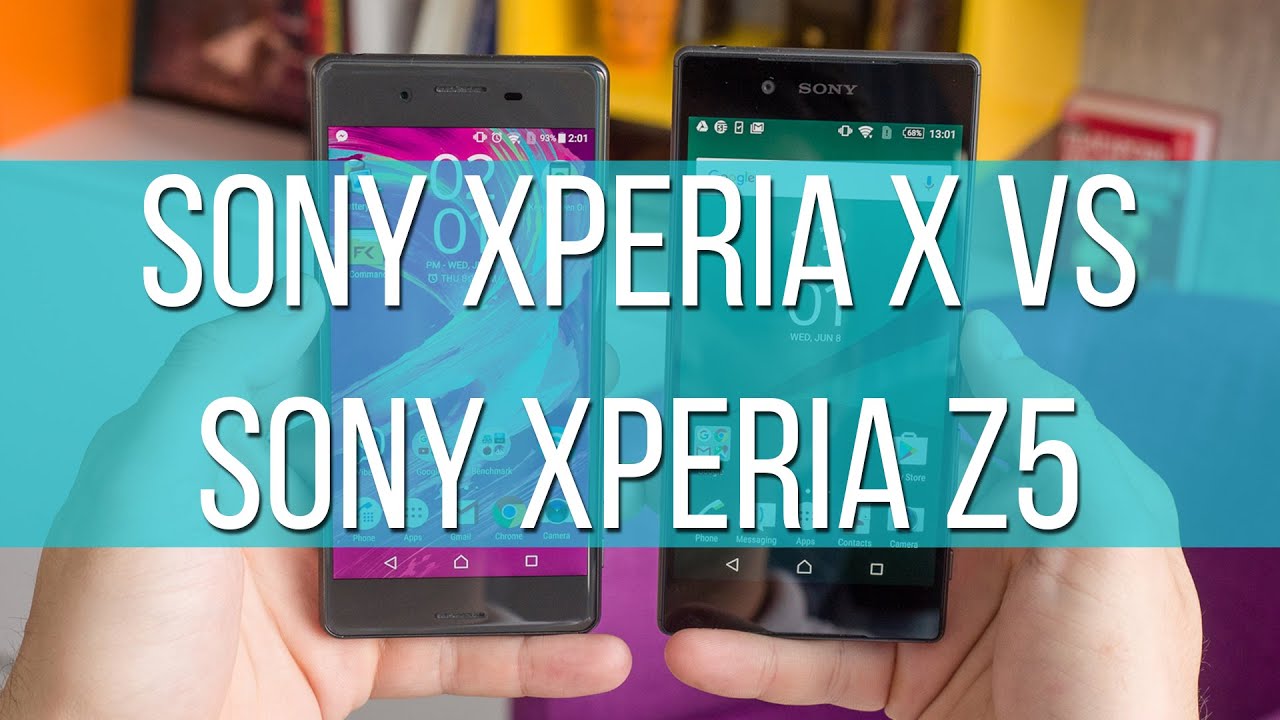
There's no denying, we're fond of Sony design, at least as far as aesthetics go. Even more so lately, with phone makers the world over adopting round form factors when designing their gadgets. Elegantly rounded, the Xperia X and Xperia Z5 are among the few standing rectangular phones of the day, and that means something if you value differentiation.
Of the two, it's hard to pick a favorite, for both have their advantages and downsides. The newer X is decidedly more minimalist, with four counts of branding insignia forgone, and with a cleaner frame. It also features a curved glass for the display that seeps into said frame, unlike the Z5 which looks a bit more ordinary from the front.
The frame of the Z5 sticks out ever so slightly at the back, cutting into our hand when operating the phone—an issue taken care of with the X. Unfortunately, both remain very slippery devices in general, though this is compounded by the aforementioned issue with the Z5.

5.63 x 2.72 x 0.3 inches
143 x 69 x 7.7 mm
5.36 oz (152 g)

5.75 x 2.83 x 0.29 inches
146 x 72 x 7.3 mm
5.43 oz (154 g)

5.63 x 2.72 x 0.3 inches
143 x 69 x 7.7 mm
5.36 oz (152 g)

5.75 x 2.83 x 0.29 inches
146 x 72 x 7.3 mm
5.43 oz (154 g)
See the full Sony Xperia X vs Sony Xperia Z5 size comparison or compare them to other phones using our Size Comparison tool.
Display
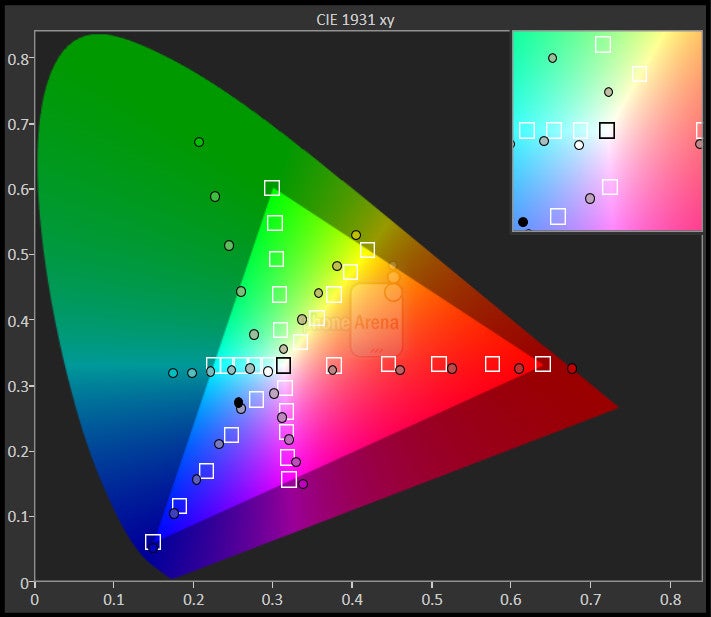
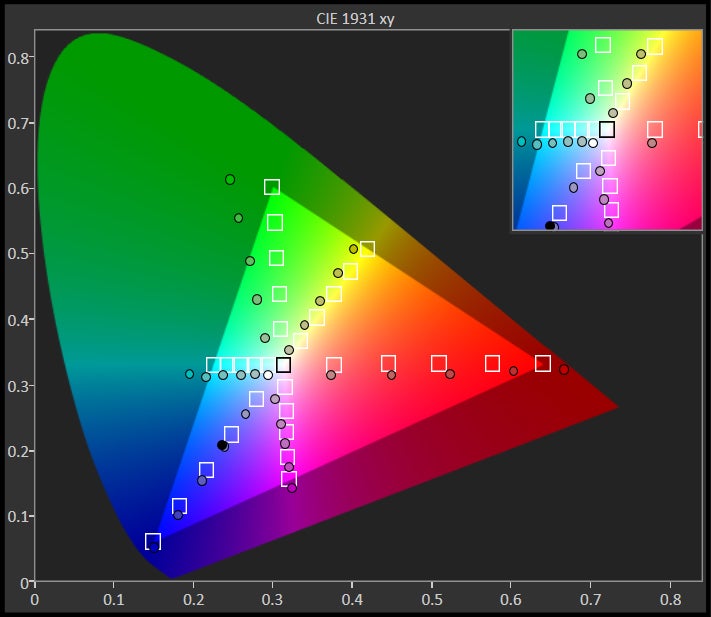
We ought to start with a simple fact: the 1080 x 1920 pixel resolution displays on the two phones are very different from each other. And not just in terms of size, with the Xperia Z5's 5.2-incher to the Xperia X's 5-incher, but also in terms of display properties.

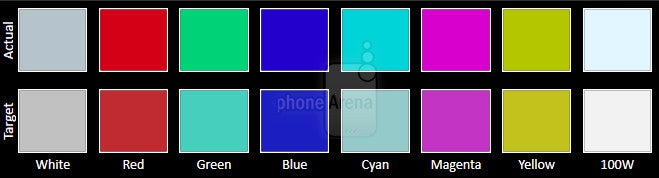
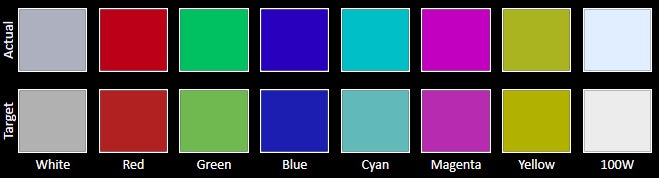
Starting with color temperature, both the Xperia X and Z5 have rather bluish screens, with the X's deviation from the reference colors being more extreme. The Z5 does win out on overall color accuracy, with a better—but not much better—representation. The Z5's 5.2-inch panel also offers higher brightness, so it's better suited for the upcoming summer months.
Going back to color, it's worth noting that both devices let you manually tweak (apart from choosing between two pre-made profiles) color temperature. If you know what you're doing, you can set these so that you get a more realistic image. Most people won't.


Interface and functionality
Always one for simplicity, the interface design team at Sony delivers very familiar UIs with both devices. Suffice to say that if you've used a Sony Xperia high-end from the past two or three years, you'll feel right at home with either. And even if you haven't tried out Sony's Xperia UI before, it's likely that you won't feel lost.
Finally, it's important to note that in the States, neither of these two offers a fingerprint scanner for reasons unknown. For buyers in Europe, however, that feature is available.
Processor and memory
On paper, the main difference between the Xperia Z5 and Xperia X are the different chipsets driving them. Both are Qualcomm creations, sure, but the Z5 is outfitted with the higher-end, octa-core Snapdragon 810, while the X packs a hexa-core Snapdragon 650. In terms of peak performance, the 810 obviously offers superior results, though due to thermal throttling it typically has some trouble maintaining them.
Looking past synthetic benchmarks, however, you'll be hard-pressed to notice a difference in day-to-day performance. Despite its less impressive silicone, the Xperia X moves about its interface with satisfying grace, rivaling the Z5. Load times are similar, frame rate within the interface is about the same, and overall we can't complain with the X. Where you're likely to notice a difference is with games, especially AAA titles with a lot of graphics fluff. When it comes to serious gaming, the Z5 is the clear pick.
Internet and connectivity
Sony relies on a well-established, solid solution when it comes to browsing: Google's Chrome. And it pays off.

Sony relies on the well-established Chrome browser
Camera
Never one to skimp on camera tech, Sony has included tantalizing hardware with both the Xperia Z5 and Xperia X. Since they share the same setup, we're looking at a 1/2.3”, 23-megapixel snapper with wide, f/2.0 aperture lens and a single LED flash. Both units make use of Sony's excellent digital stabilization software, though only the X comes with the new predictive autofocus tech. Up front, the Xperia X comes with a 13-megapixel selfie cam, whereas the Z5 sports a 5-megapixel unit.

On the software side, it's once again nigh impossible to differentiate the two, as they feature the same new, minimalist Sony Camera app with its down-to-the-point interface. Clutter is minimal and you switch between various modes by swiping up and down through the menu on the left hand side. The special Modes menu of old is still available and provides access to various other creative and functional shooting modes.
Changing gears to image quality, you'd imagine that both devices offer essentially identical performance, but you'd be actually wrong to think so. Overall, and without a doubt in our mind, the Xperia Z5 is the more consistent, superior cameraphone.
Sony Xperia X vs Sony Xperia Z5 Sample Images
Finally, in terms of video, the Xperia Z5 notches a win again, thanks to its ability to capture 4K UHD video. Both devices can also shoot 1080 x 1920 resolution video at 30 or 60 frames per second, along with timelapse video.
Sony Xperia X vs Sony Xperia Z5 Video Samples
Multimedia
With Sony targeting the much wider color gamuts that are used in the movie industry with the displays on the Z5 and the X, you'd think that you're getting a great multimedia device. But that's not really the case.
Sure, both displays are large enough to allow for some enjoyment out of movie watching, but do keep in mind that even if you do happen to have content that is intended to be viewed on such wide gamut displays, Android will not be able to interpret it. This results in overblown colors across the board.
Call quality
Call quality with the Xperia X and Xperia Z5 is highly similar, regardless of whether you're looking at earpiece or microphone performance.
With both, the earpiece is superior to their respective microphone, delivering relatively clear and tonally correct voices that we immediately recognize. In the big scheme of things, we'd rank them better than average.
On the other end, however, things aren't as good. The microphone lacks power, so the other side will have trouble making out everything you say in a busy environment. For what it's worth, however, the Xperia X's unit is slightly more powerful.

Battery life
In terms of total capacity, the 2,900mAh cell of the Xperia Z5 has the lead over the 2,620mAh unit of the Xperia X. But as you should know by now, numbers are just numbers.
Indeed, we found the numbers to be unrepresentative of our experience, with the Xperia Z5 offering worse battery performance with perhaps a 10% drop in longevity compared to the X. Not a massive advantage for the newer device, sure, but still something to keep in mind. Obviously, this ratio can vary wildly depending on what your typical usage looks like.
When it comes to charging times, the Xperia X, with its smaller juicer getting filled up some 15 minutes quicker than the larger unit of the Z5.
Conclusion
Available for order at $549.99, the Xperia X is a smartphone that doesn't disappoint, but feels a bit too expensive for what it offers. And thanks to its seniority, the Xperia Z5 is dangerously close in terms of pricing—nowadays you can score one for as little as $600.

Our opinion? If you can get the Xperia Z5 for as much as $100 extra over the X, it's worth it. If you can't, go for the Xperia X
Sony Xperia X
Pros
- More ergonomic design
- Superior outdoor visibility
- Better battery life
- Better selfie camera
Sony Xperia Z5
Pros
- Less color-incorrect display
- Better-suited for heavy gaming
- Superior camera with 4K UHD video capture
- Stronger loudspeaker volume

Follow us on Google News










Things that are NOT allowed:
To help keep our community safe and free from spam, we apply temporary limits to newly created accounts: