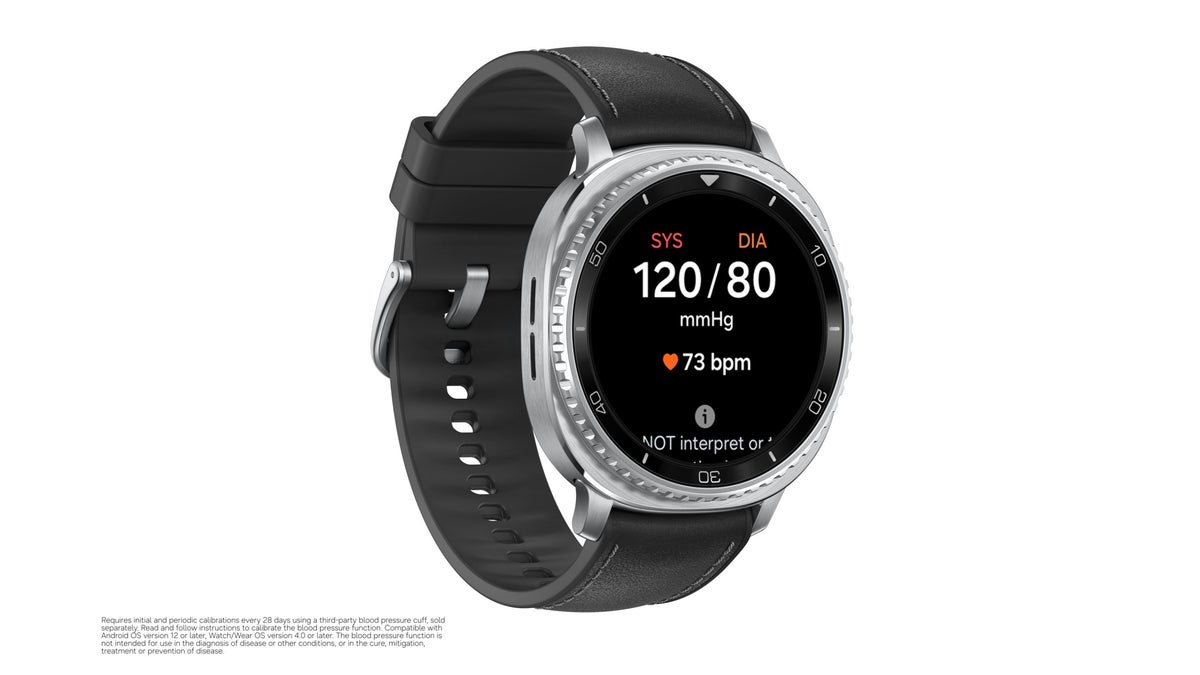
Galaxy Watch 8 Classic with BP readings. | Image by Samsung
If you own a Galaxy Watch and you've been waiting (and waiting, and waiting) for blood pressure monitoring to finally work in the US, today is the day. Samsung just flipped the switch.
Samsung unlocks blood pressure monitoring for US Galaxy Watch owners
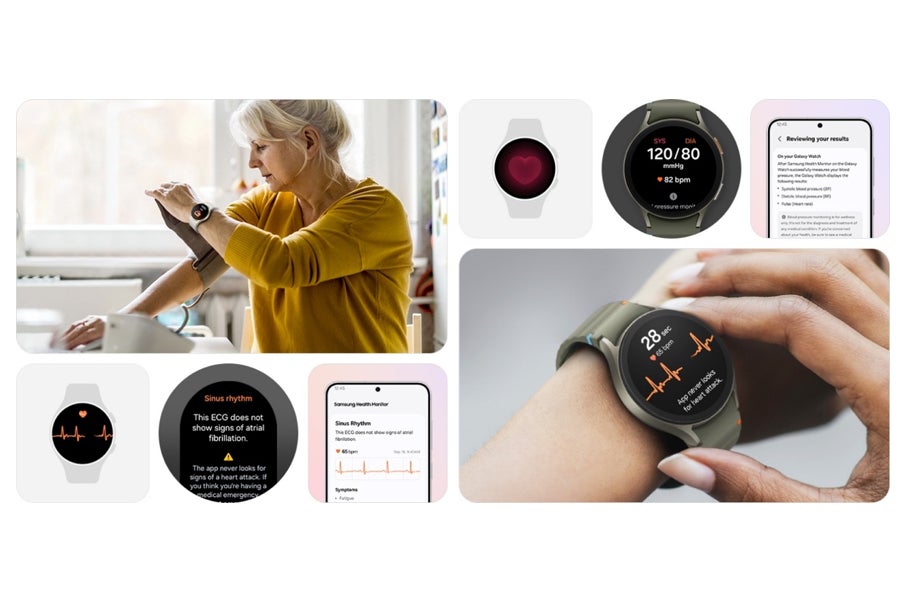
Here's how it works: you'll need an upper arm blood pressure cuff (sold separately) to calibrate your watch every 28 days. Once calibrated, your Galaxy Watch can measure your systolic and diastolic blood pressure along with your heart rate using its built-in sensors. It's not a replacement for medical diagnosis, but it puts real, actionable health data on your wrist between doctor visits.
Recommended For You
Samsung also teased that passive blood pressure monitoring, which would track BP trends over time without requiring manual measurements, is coming later this year.
Six years in the making
Galaxy Watch Blood Pressure Monitoring. | Image by Samsung
Samsung first introduced blood pressure monitoring on the Galaxy Watch Active 2 back in 2020. The feature has been live in over 70 countries for years, including Canada, which is literally right next door.
US Galaxy Watch owners, meanwhile, were left in the dark. Samsung community forums are filled with frustratedusers who bought watches specifically for this feature, only to find it locked behind regulatory barriers. Nearly 120 million adults in the US suffer from high blood pressure, according to the CDC, and they had to watch this capability exist everywhere but here.
Recommended For You
Whether the holdup was the FDA dragging its feet or Samsung not pushing hard enough, the result was the same: silence. No timeline, no updates, no transparency. That's the part that stings.
How Samsung's feature stacks up against Apple's
Apple beat Samsung to the punch with its own FDA-cleared hypertension detection feature on the Apple Watch back in September 2025. But the two features are fundamentally different.
Apple's approach is passive: it monitors blood vessel patterns over 30-day periods and alerts you if it detects signs of hypertension. It never gives you an actual blood pressure reading. Samsung's feature, on the other hand, provides real systolic and diastolic numbers that you can track, log, and share with your doctor.
That's a meaningful distinction. If you're actively managing blood pressure, actual readings are far more useful than a notification that says "you might have a problem." The tradeoff is the cuff calibration every 28 days, but for anyone serious about tracking their cardiovascular health, that's a small ask.
How do you feel about Samsung's blood pressure monitoring finally arriving in the US?
A win that came with too much silence
I don't have personal experience with blood pressure monitoring on a Galaxy Watch, but I know this: Samsung had the technology ready years ago and US users deserved better communication about why it wasn't available here. The Galaxy Watch 8 series already packs some of the most capable health hardware in any smartwatch, and this feature finally lets it live up to its full potential.
That said, if you're pairing your Galaxy Watch with a non-Samsung phone, keep in mind that blood pressure monitoring requires a Samsung Galaxy phone to function. That's an FDA compliance thing, not a choice, but it's still a limitation worth knowing about.
This is a genuine win for Galaxy Watch owners, and it's the kind of health feature that could genuinely help people.
Johanna 'Jojo the Techie' is a skilled mobile technology expert with over 15 years of hands-on experience, specializing in the Google ecosystem and Pixel devices. Known for her user-friendly approach, she leverages her vast tech support background to provide accessible and insightful coverage on latest technology trends. As a recognized thought leader and former member of #TeamPixel, Johanna ensures she stays at the forefront of Google services and products, making her a reliable source for all things Pixel and ChromeOS.
A discussion is a place, where people can voice their opinion, no matter if it
is positive, neutral or negative. However, when posting, one must stay true to the topic, and not just share some
random thoughts, which are not directly related to the matter.
Things that are NOT allowed:
Off-topic talk - you must stick to the subject of discussion
Offensive, hate speech - if you want to say something, say it politely
Spam/Advertisements - these posts are deleted
Multiple accounts - one person can have only one account
Impersonations and offensive nicknames - these accounts get banned
To help keep our community safe and free from spam, we apply temporary limits to newly created accounts:
New accounts created within the last 24 hours may experience restrictions on how frequently they can
post or comment.
These limits are in place as a precaution and will automatically lift.
Moderation is done by humans. We try to be as objective as possible and moderate with zero bias. If you think a
post should be moderated - please, report it.
Have a question about the rules or why you have been moderated/limited/banned? Please,
contact us.










Things that are NOT allowed:
To help keep our community safe and free from spam, we apply temporary limits to newly created accounts: